
 by
by The Banker Who Financed Empires and Invented Modern Finance
Jacob Fugger and the Fugger Dynasty: Architects of High Finance
The name Jacob Fugger, known to history as “the Rich,” deserves a paramount place in the Business Hall of Fame. His career in the early 16th century represents a quantum leap in the scale, sophistication, and political power of commercial enterprise, effectively inventing the model of the modern international investment bank. Operating from the Imperial Free City of Augsburg, Fugger did not merely lend money; he engineered financial and industrial systems that funded the ambitions of emperors and popes, monopolized European copper and silver production, and created a news and courier network that gave him an unparalleled information advantage. His most audacious act was financing the election of Charles V as Holy Roman Emperor in 1519, a transaction that crystallized the new reality: capital could crown kings. Fugger’s empire was a sprawling, vertically integrated conglomerate that combined mining, trade, banking, and intelligence-gathering, demonstrating principles of risk management, political lobbying, and global supply chain control that remain relevant to multinational corporations and financial institutions today.
From Weaver’s Son to Financial Titan: Building the Conglomerate

The Fugger family foundation was laid by Jacob’s grandfather, Hans Fugger, a weaver who migrated to Augsburg. The business expanded under Jacob’s uncle, Lukas, and father, Jakob the Elder, into the lucrative trade of Italian silks and spices. Jacob, born in 1459, was sent as a young man to Venice, the epicenter of Renaissance finance, where he apprenticed at the Fondaco dei Tedeschi. Here, he mastered the tools of his future trade: double-entry bookkeeping, bills of exchange, maritime insurance, and the critical assessment of political risk. Upon returning to Augsburg, Jacob and his brothers Ulrich and Georg leveraged their capital and connections to make a series of decisive moves. They began lending to the cash-strapped Archduke Sigismund of Tyrol, accepting as collateral the revenues from Tyrolean silver mines. When Sigismund defaulted, the Fuggers took over the mines themselves. This patterntransforming sovereign debt into equity and control of hard assetsbecame the cornerstone of their wealth. They applied it on a grand scale with the Habsburg dynasty, particularly Emperor Maximilian I and his grandson Charles V. In exchange for vast loans to fund military campaigns and imperial politics, the Fuggers received not only interest but also mining rights, land titles, and trading privileges. Their most famous deal, the 1519 loan of 543,000 gold guilders to bribe the prince-electors to choose Charles V, was secured against the revenues of the Spanish crown’s vast mercury and silver mines at Almadén and Guadalcanal. This deal is meticulously documented in financial histories of the period, such as those found in the Encyclopædia Britannica.
The Engine of Wealth: Monopolizing the European Metals Trade
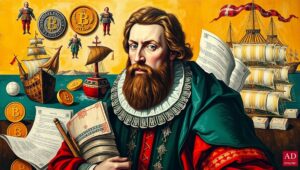
At the heart of the Fugger empire was a deliberate and ruthless strategy to control the supply of precious metals. Copper, essential for cannon-making, and silver, the basis of European coinage, were the oil of the 16th century. Through loans and political favors, Jacob Fugger assembled a near-total monopoly over Central European copper production from mines in Tyrol, Hungary (Neusohl, today’s Banská Bystrica), and the Slovakian Carpathians. He then controlled its distribution, using his own shipping and trading networks to supply markets from Antwerp to Venice and the Ottoman Empire. His most brilliant industrial feat was the “Fugger-Thurzo Company,” a joint-stock partnership established in 1495 with Hungarian nobleman Johann Thurzo. This entity, a precursor to the modern corporation, combined Fugger’s capital and marketing genius with Thurzo’s mining expertise and local political influence. They introduced advanced pumping technology to drain deep shafts and smelting techniques to increase yield, transforming the Hungarian mining industry. The profits were staggering. In the first decade of the 16th century, the Fuggers’ annual profit from their Hungarian copper operations alone was estimated at over 100,000 guilders. This vertical integrationfrom owning the mine, to refining the ore, to controlling the global sales networkmaximized profit at every stage and insulated the business from market fluctuations. Analyses of early modern monopolies, like those by the Economic History Association, often cite the Fuggers as a prime example of pre-industrial cartelization.
The Information Network: The First Private Intelligence Service

Jacob Fugger understood that in high-stakes finance and politics, information was the ultimate currency. Long before Reuters or Bloomberg, he built the world’s first comprehensive private news and courier service. His network of agents, stationed in every major European commercial and political centerRome, Venice, Lisbon, Antwerp, Krakow, and the Habsburg courtsprovided him with a constant stream of intelligence. They reported on political intrigues, troop movements, commodity prices, currency exchange rates, and the creditworthiness of kings. This system, which required a significant investment in horses, couriers, and trusted employees, gave Fugger a decisive competitive edge. He could anticipate market shifts, assess risks with superior data, and make lending decisions faster and more accurately than any rival. His “Fugger Newsletters,” compiled from these reports and circulated among family members and key allies, are considered precursors to the financial press. This relentless pursuit of information was a direct forerunner to the market research and competitive intelligence units of modern corporations. The critical role of information in early capitalism is a key theme in scholarly works, such as those accessible through JSTOR’s digital library.
Lessons Learned: The Legacy of a Financial Architect
The rise and legacy of Jacob Fugger “the Rich” offers enduring lessons for students of business and economics. First, he demonstrated the transformative power of **finance as a tool for industry**. He used banking not for its own sake but to acquire and optimize productive assets, creating a symbiotic relationship between capital and commodities. Second, he was a master of **political risk management**. He didn’t shy away from lending to sovereigns; he structured deals to secure tangible, revenue-generating collateral, turning the high risk of sovereign default into an opportunity for asset acquisition. Third, he pioneered **vertical integration and monopoly control** in a pre-industrial con, showing how dominating an entire supply chainfrom extraction to salecreates immense, defensible value. Fourth, he institutionalized the **strategic value of information**, building infrastructure to reduce uncertainty in an unpredictable world. Finally, his life forces a confrontation with the ethics of business power. His creation of the Fuggerei in 1516, the world’s oldest existing social housing complex in Augsburg, stands as a landmark in corporate social responsibility. Yet, his financial manipulation of politics, most starkly in the imperial election, showed how concentrated capital could distort governance. His story is a foundational chapter in the history of global capitalism, illustrating both its immense creative potential and its inherent tensions with democratic and social values. For a deeper exploration of his impact on European politics and economy, the Habsburg Network provides expert historical con on his relationship with the dynasty he bankrolled.


